Short answer: a med spa website should include a clear treatment menu, a dedicated page for each main treatment, a visible booking button on every page, upfront deposit and cancellation details, provider credentials, location and contact information, financing details if you offer them, and a mobile path that reaches the correct booking screen in as few taps as possible.
The booking-focused checklist
- Treatments grouped the way patients think about them
- A page for each main treatment or category
- Book and consultation actions on every page
- Links that open the right service in your booking system
- Deposit, card-on-file and cancellation terms before checkout
- Provider names, roles and credentials
- Address, hours, phone, parking and directions
- Financing information with accurate terms
- Genuine reviews and properly authorized patient photos
- A tested mobile menu and booking path
Organize treatments the way patients search
Patients do not always know the clinical or brand name of what they need. Some search for “lip filler,” others for “laser hair removal,” and others simply want help with skin texture. Your navigation should make each of those starting points easy to recognize.
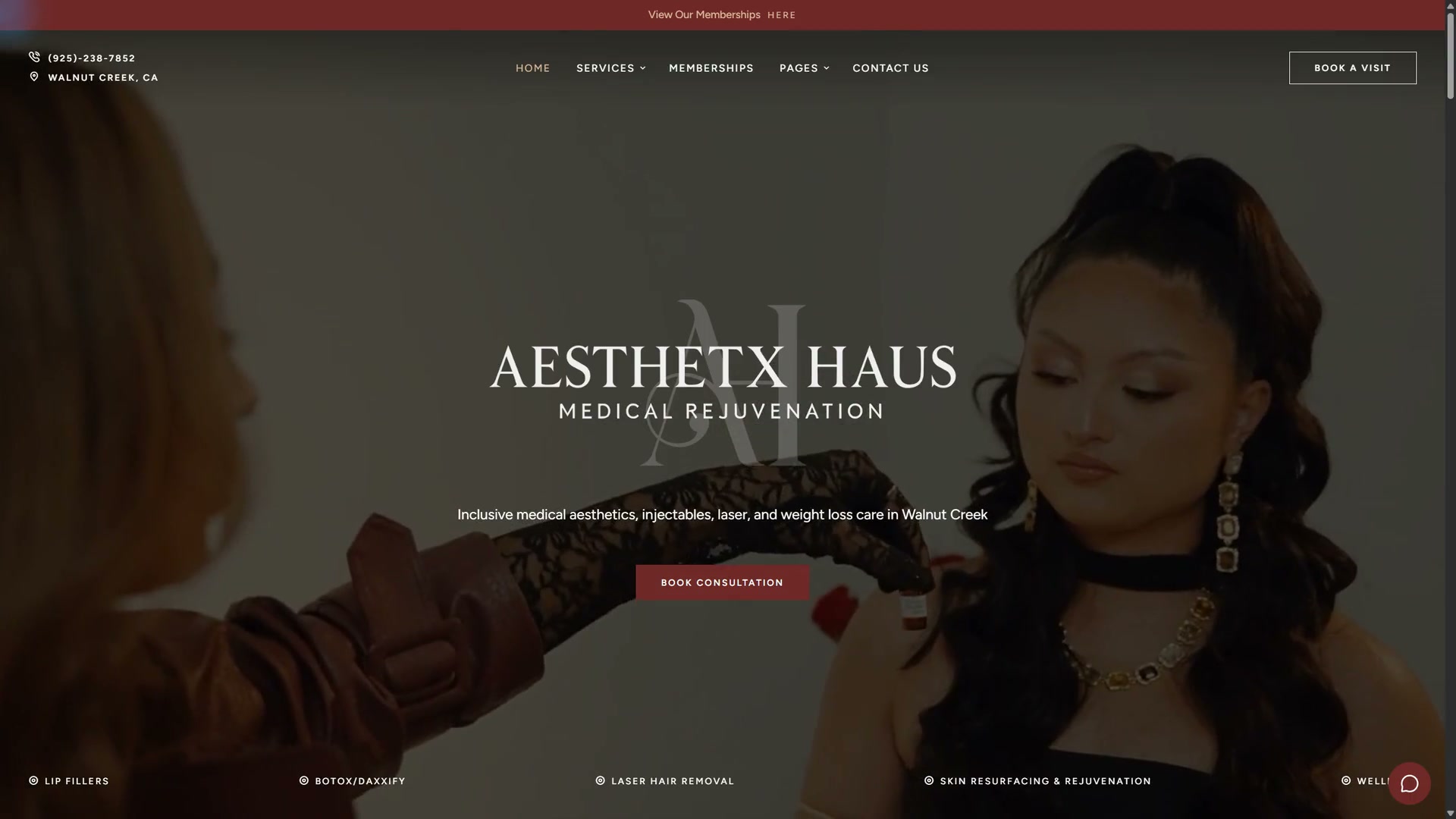
For Aesthetx Haus in Walnut Creek, California, we structured the site around eight treatment categories:
- Lip Filler & Dermal Fillers
- Neuromodulators
- Medical Weight Loss & Wellness
- Skin Treatments
- Laser Skin Treatments
- Laser Hair Removal
- Regenerative Injectables
- Liquid BBL
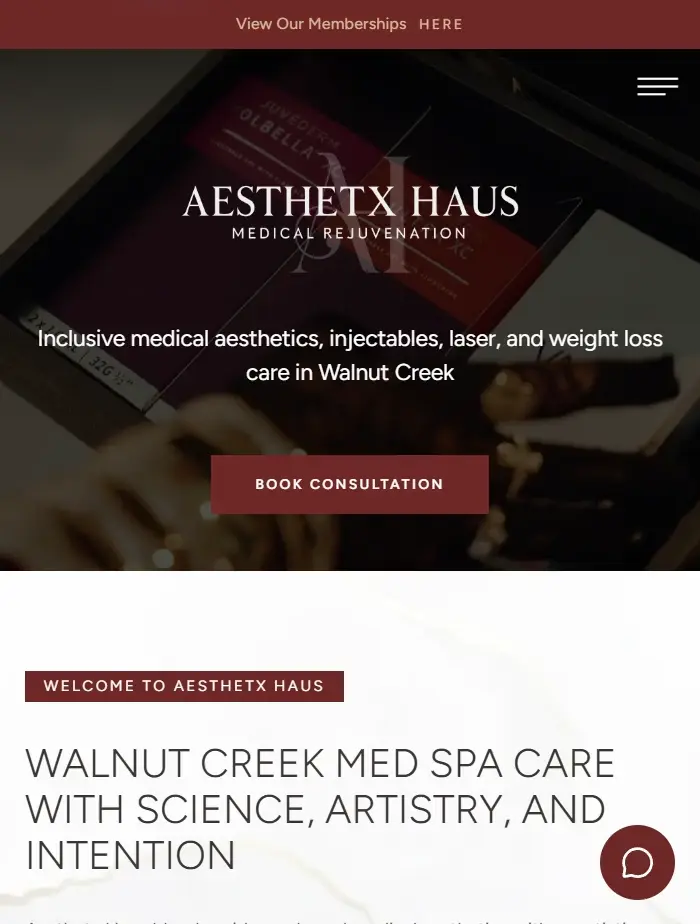
On mobile, a menu that long needs nesting so patients can open one group at a time. That was a specific design requirement for this project.
What each treatment page should answer
A useful treatment page helps someone decide whether to book or ask a question. Have a qualified clinician review it, and cover:
- What the treatment is and who performs it
- Who may be a candidate, and that suitability is decided at consultation
- What happens during the appointment
- Typical preparation and aftercare, as approved by your medical team
- Risks and side effects in plain language
- Pricing, or how pricing is determined
- A booking link for that specific treatment
Accuracy matters most here. The FDA’s dermal filler guidance, for example, distinguishes approved uses from areas where fillers are not approved. The FTC’s health products guidance says health benefit and safety claims need competent and reliable scientific evidence. Avoid wording such as “guaranteed,” “painless” or “no risk” unless your legal and medical advisers have confirmed it is supportable.
Connect to the booking system you already use
Most clinics do not need new scheduling software just because they are getting a new website. Aesthetx Haus already used Mangomint, so we connected the site’s booking actions to that system. Staff keep the workflow they know, and patients move from the website directly into live scheduling.
Check what your platform supports before design begins. Mangomint’s online booking, for instance, supports booking from a clinic’s website, booking without creating an account, required cards for certain services, and deposits or full payments. Other platforms differ, so confirm these details with your provider:
- Can you link directly to a service, category or provider?
- Should booking be embedded or open on the provider’s page?
- Does the flow work well on small screens?
- Which analytics or tracking tools, if any, are appropriate on booking screens?
Separate “book” from “consult”
A returning patient may be ready to book a known treatment. A new patient may need a consultation first. Label those paths clearly so neither person lands in the wrong flow.
Show the terms before the commitment
If you require a deposit, a card on file or a cancellation fee, state it on the treatment page and again in booking. Stating it early avoids a surprise at the final step and gives both the patient and the clinic a clear record if a question comes up later.
Make financing easy to find and accurate
If you offer patient financing, link to it from relevant treatment pages and give it a dedicated page. Aesthetx Haus has a separate financing page with an application route through Cherry.
Describe the arrangement precisely. Cherry states that it is a financial technology platform rather than a bank or lender, that financing comes through partner lenders, and that eligibility is not guaranteed. Avoid “everyone is approved” or a specific rate unless it comes from your provider’s current approved language.
Build trust without overstepping
Providers and credentials
Name who treats patients and list their actual role and credentials. This is often what a new patient looks for before booking an injectable or laser treatment.
Reviews
Use genuine reviews and do not edit their meaning. The FTC’s reviews rule addresses fake testimonials and incentives conditioned on a positive or negative sentiment. Its endorsement guidance also says that if a featured result is not typical, the ad should make clear what people can generally expect.
Before-and-after photos
Publish patient images only with documented permission, and ask your healthcare attorney what authorization your practice needs under HIPAA and state law. Use unretouched images, keep lighting and angles consistent, and avoid implying that every patient will get the same result.
Tracking on health-related pages
Marketing tags can raise privacy questions when they run on booking or intake screens. A federal court vacated part of HHS’s online tracking guidance in 2024, but that ruling did not remove every obligation. Other portions and state privacy laws may still apply, so have counsel review your setup before adding advertising pixels.
Make local details impossible to miss
Show your address, service area, hours, phone number and parking information, and keep them consistent with your Google Business Profile. Google says local results are mainly based on relevance, distance and prominence. Complete, accurate information supports the first of those and helps patients actually reach you.
Test the mobile path before launch
Use a real phone and complete these tasks without help:
- Find a specific treatment from the homepage.
- Learn the price or how pricing works.
- Open booking for that exact treatment.
- Find the deposit and cancellation terms.
- Call the clinic with one tap.
- Get directions.
- Reach the financing page.
Include accessibility in that review. The Department of Justice says the ADA applies to the web content of businesses open to the public, naming medical offices among its examples, and points to standards such as WCAG. Practical checks include 4.5:1 contrast for normal text, labeled form fields, image alt text and keyboard access. A checklist is not a legal opinion, so ask a qualified specialist if you need a compliance review.
Planning a rebuild? See our med spa website design service, compare what a service business website costs, or read why a site can get visitors but few inquiries.